
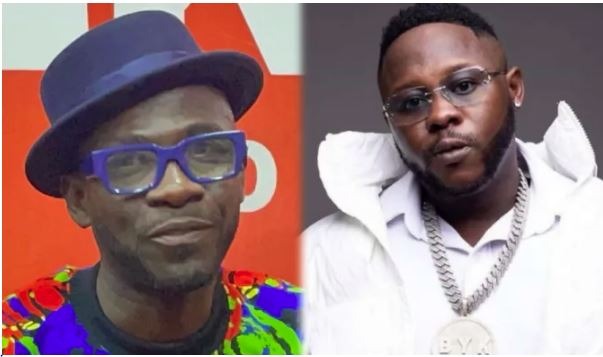
If you were glancing at social media during the just-ended TGMA season and saw the chatter about Medikal’s “Shoulder,” you’re not alone. The shockwaves weren’t just about a hit song; they hit the heart of what “Most Popular Song of the Year” should represent. And yes, the man many fans affectionately call Rap Docta, Okyeame Kwame, weighed in with his own layered take.
The red carpet and the room’s energy were undeniable. In an exclusive chat with Tony Best on Akoma FM, Okyeame Kwame painted a picture of TGMA 202X as one of the best editions yet. He praised everything from the glitz on the red carpet to the outfits that stood out in world-class fashion. “The red carpet looked beautiful. Nana Akua Addo’s outfit was amazing and of world-class design. Not only her, Sister Derby, and everyone else also looked stunning and pulchritudinous,” he noted. It wasn’t just a fashion moment; it felt like a celebration of Ghana’s vibrant music scene.
As much as the night shone with style, it was the winners’ circle that sparked debate. Okyeame Kwame’s verdict on the major prize was thoughtful, measured, and honest. He singled out Black Sherif for the Artist of the Year, saying, “Black Sherif deserved the award because he is so talented and has worked so hard to become the Black Sherif he is today.” That line wasn’t just praise; it was a nod to a rising epoch in Ghanaian music and the grind behind the scenes.
But then came the curveball: Medikal’s “Shoulder” being proclaimed the “Most Popular Song Of The Year.” The rapper-turned-critic in Kwame emerged. He admits he was taken aback, and his reasoning is as instructive as it is human. Initially, he thought the remix of “Shoulder” might have eclipsed the original in popularity. Yet, after the awards, he says he gained clarity “on which among the duo was more popular and bigger,” and now, he understands that the original “Shoulder” deserved the top spot.
This admission matters for several reasons. First, it highlights a core truth in popularity contests: metrics aren’t always obvious from the credits. Second, it shows the humility of a veteran artist who’s been around long enough to recalibrate his stance when new information comes to light. And third, it underscores a broader conversation about how awards categories capture (or miss) the pulse of the audience.
Okyeame Kwame’s public reflections also shed light on a larger theme in the modern Ghanaian music ecosystem: the split between remix culture and original works. For a period, remixes can drive hype, but original tracks can cement a lasting footprint in the cultural psyche. Kwame’s careful distinction “if the ‘Shoulder’ is bigger than the remix, then it’s fine”—is more than a line of defense; it’s a nuanced reminder that popularity is a living, shifting target.
For fans who live and breathe the music gossip,Kwame’s approach is refreshing. He isn’t here to tear down; he’s here to understand, to acknowledge talent, and to celebrate the perseverance that shapes a year’s worth of music. His cadence—clear, respectful, and grounded fits the persona of a true rap icon, the “Rap Docta,” who knows when to speak and when to listen.
What does this tell us about the “Most Popular Song Of The Year” award itself? It reminds us that popularity isn’t a one-size-fits-all measure. It’s a mosaic made from streaming numbers, cultural resonance, radio play, remix dynamics, and the conversations fans have in the weeks following the gala. The TGMA stage might crown a song as popular, but the real conversation often continues in living rooms, on city streets, and in the headphones of daily commuters who replay that track until it feels like a personal anthem.
Okyeame Kwame’s reflections add another layer: the event’s success isn’t solely about who wins what; it’s about celebrating artists who push the culture forward. He’s quick to commend Black Sherif for the Artist of the Year an acknowledgment of talent, consistency, and the hard miles that propel an artist to the top. And while Medikal’s “Shoulder” claim drew attention, Kwame’s measured stance invites fans to think critically about how awards align with an artist’s impact.
If you’re chasing a takeaway from this TGMA season, it’s this: credibility in the eyes of veterans matters just as much as initial hype. The exchange between the remix and the original, the momentary surprise at the winner’s list, and the way a seasoned artist reframes the narrative all contribute to a healthier national music discourse.
So, should we accept the award as a definitive measure of “the most popular song”? Maybe not as a rigid rule, but as a snapshot of a moment in time the year’s shared soundtrack, with its crescendos, debates, and heartfelt nods to artists who keep pushing Ghana’s music forward.

Leave a Comment